
À table

This spring I was at a friend’s house for dinner. It was a light meal — salad, cheese, bread, and lots of wine. The salad was a glistening bed of giant, crisp leaves fresh off the produce stand. Once everyone had sat down, I put my napkin on my lap, picked up my knife and fork, and sliced into one of the leaves. I felt the glance of the three other people at the table shift toward my plate. “You know that’s rude?” the host said.
While for an instant my heart stopped, I looked up to see that everyone was smiling amusedly at my ignorance. “We don’t care. But if you’re ever at a fancy party here in France we don’t do that.”
“That” which we don’t do is cut our lettuce. We fold it, apparently, no matter how intimidatingly large the pieces might be.
There are two main reasons for this. The first has to do with tradition. Once upon a time the upper class used cutlery made of real silver. Cutting the vinaigrette-coated salad with these would cause the silver to tarnish.
The other reason, which is more relevant to your average modern diner, is that cutting your salad would seem to imply that the host hasn’t properly prepared the dish and provided you with appropriately-sized leaves.
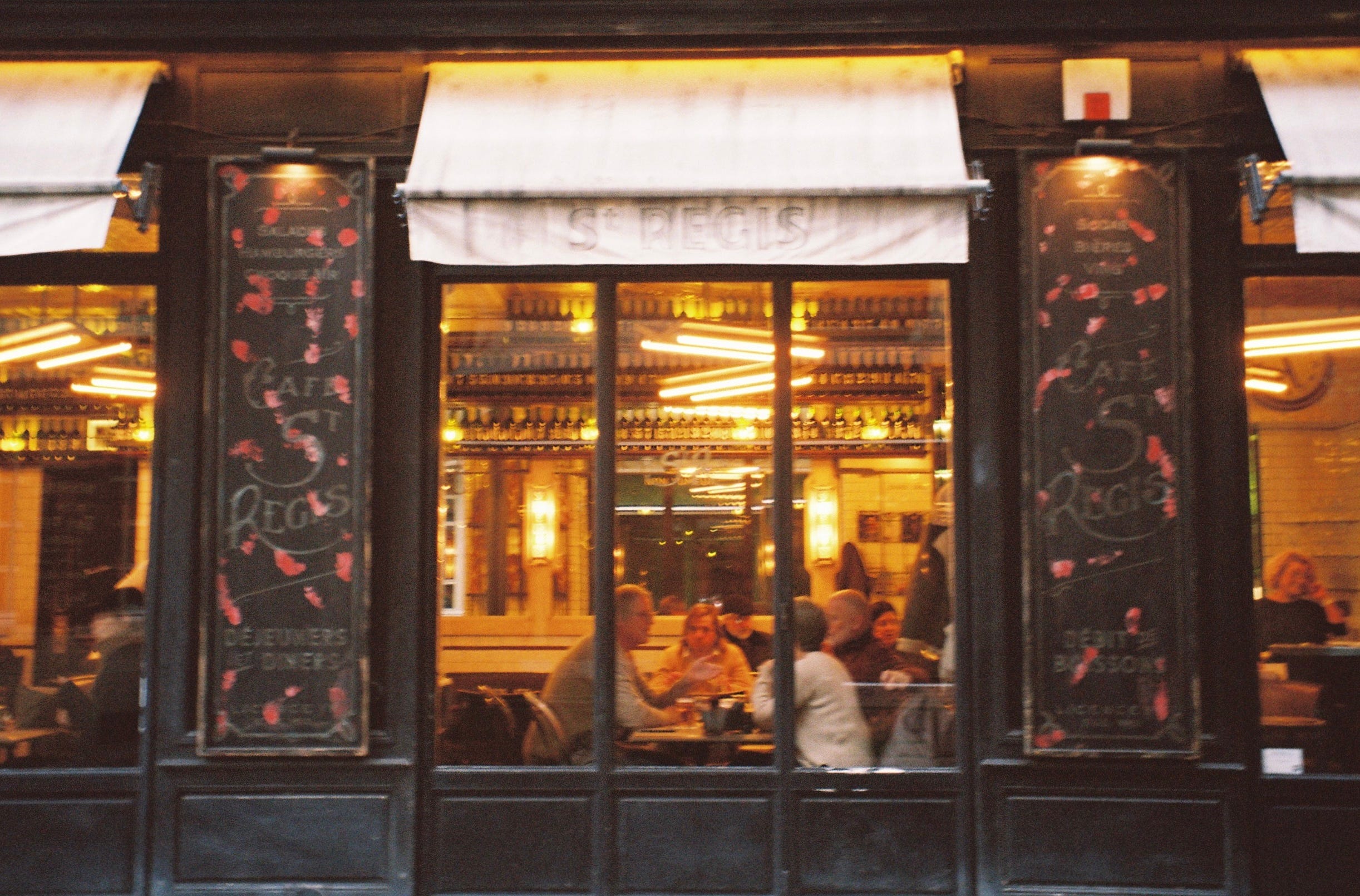
Most of the French rules and superstitions I’ve learned so far apply to dining.
Quite a few rules govern the act of toasting, which as not as simple as I once thought.
First of all — and I can claim to have known this before moving here — you must always look the person whose glass you’re clinking directly in the eyes as you do so.
Second, no crossing glasses with other toasting pairs.
Third, during a toast, a glass with alcohol in it must not touch a glass that contains a nonalcoholic drink.
The curse, if you fail to adhere to any of these requirements, is seven years of bad sex. Even those who claim not to be superstitious take this one seriously.
Another very important rule dictated by superstition is that you must never place your baguette on the table upside down. When I first heard this I thought maybe it was seen as a desecration, akin to placing holy scriptures on the ground in front of a worshiper who believes doing so will incur the wrath of God.
I asked someone what the reason for this rule was. He said he actually didn’t know and that his mom always just told him, “Parce que c’est mal.”
It turns out this norm has roots in the Middle Ages, when, as the unverified story goes, bakers would set aside a loaf of bread for the local executioner by turning it upside down so everyone would know who it was reserved for lest they cross the most dangerous man in town. The supposed consequence is that if you turn your baguette upside down, you are invoking a curse of hunger upon yourself.
A more positive bread practice you should note that in most casual settings, you are not only permitted but encouraged to mop up whatever residue remains on your plate with a torn-off chunk of baguette. Maybe don’t do this at a Michelin-starred restaurant. But at any old lunch it would be strange not to finish the meal this way.
Lastly, in my experience, I’ve noticed that people in France tend to be more conscientious than Americans (perhaps particularly Californians) even in casual settings. Here, regardless of whether I’m at a dinner party or grabbing lunch with a close friend, they will always fill my water glass before pouring themselves more water. In the U.S. if you’re with close friends it’s often not frowned upon if you don’t do this. Everyone kind of just takes what they need for themselves.
I’m sure I’ll have plenty more rules to add to the list in the coming months, because here if I do something wrong at the table someone will absolutely tell me.
obsessed with the last line .
I love your post. When I went to France as a teenager, a hundred years ago, I was politely taught to fold my lettuce. I still do it as a way to remember back to the day of my first French food lesson.